
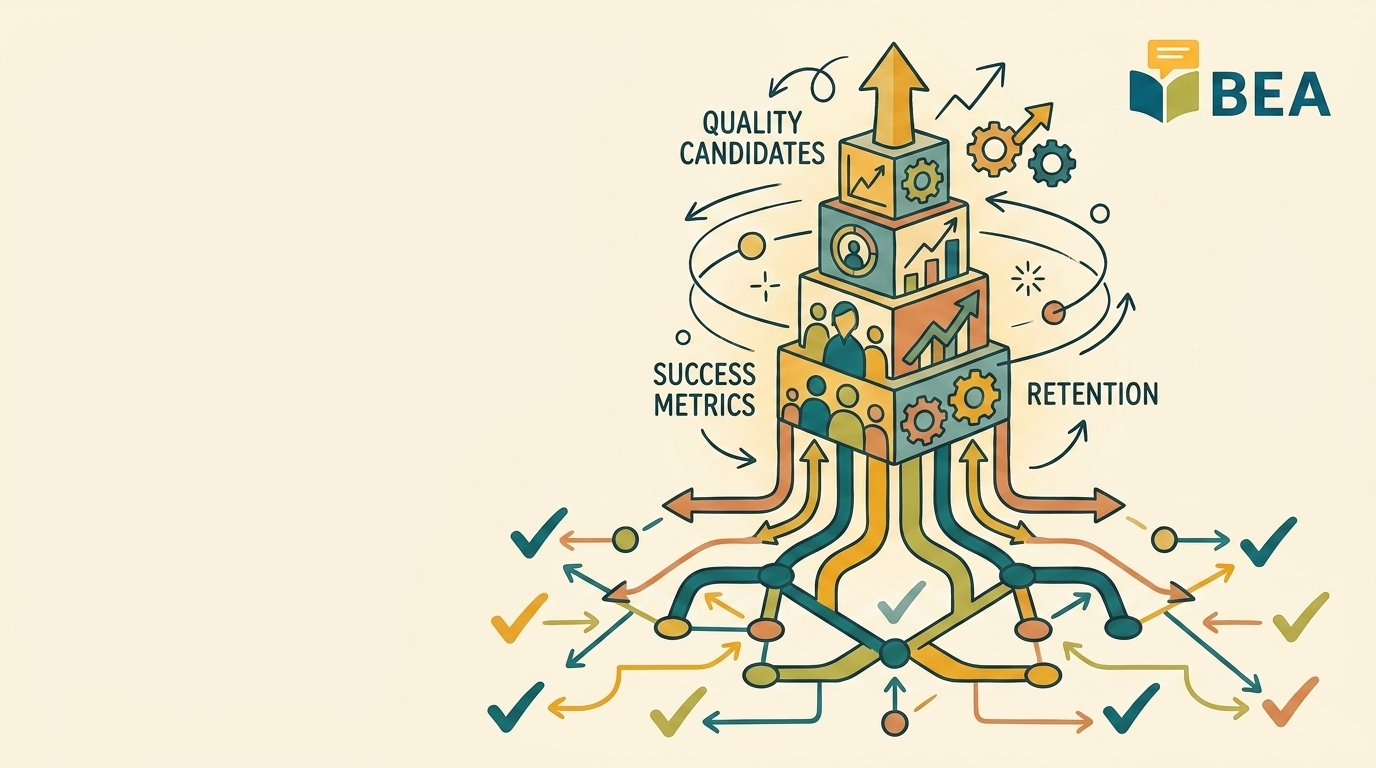
For many logistics businesses, high staff turnover is a persistent problem. However, one UK-based freight and distribution company discovered that its attrition issue traced back to a single, overlooked variable: English language proficiency. By integrating BEA corporate hiring results into their shortlisting process, they transformed their recruitment outcomes in under six months. This case study shares what changed — and what other hiring teams can apply today.
The logistics sector is demanding. Roles require clear written communication, accurate documentation, and confident verbal coordination across teams. Consequently, when candidates enter onboarding without the language skills the role demands, costly mismatches follow quickly.
The Problem: High Attrition Traced to Miscommunicated English Expectations
The company — a mid-sized logistics operator managing over 200 operational staff — noticed a troubling pattern in early 2026. New hires were leaving within their first 90 days at a rate above the industry average. Internal exit interviews pointed to one recurring theme: new employees felt overwhelmed by the written and verbal communication demands of the role.
In fact, the company’s HR team calculated that each failed hire cost approximately £3,000–£5,000 when factoring in recruitment fees, onboarding time, and productivity loss. Research from the CIPD supports this, indicating that poor role-fit is among the top three drivers of early-tenure attrition in UK workplaces.
Despite this, the business had no formal mechanism for assessing English proficiency before offer stage. Recruiters relied on informal impressions gathered during interviews. Consequently, candidates who presented well verbally were progressing to offer — even when their written communication skills fell short of operational requirements.
The team needed an objective, standardised measure they could apply consistently across all candidates.
BEA Corporate Hiring Results: Adding Score Data to Shortlisting Criteria
In March 2026, the company’s talent acquisition lead introduced BEA English Assessment as a mandatory pre-shortlist step for all operational and supervisory roles. Candidates received a link to complete the assessment independently. Results were then submitted directly to the hiring team for review alongside CVs and cover letters.
Notably, the BEA assessment measures four core language competencies: reading, writing, listening, and speaking. Each is scored on a clear numeric scale, giving recruiters an objective data point rather than a subjective impression. This shift meant that BEA corporate hiring results entered the decision-making process at the earliest possible stage.
For practical guidance on how candidates submit their results and how your team can verify them, visit BEA English Assessment — the platform offers clear instructions for both candidates and commissioning employers.
The minimum score threshold was set collaboratively between HR and department heads. Roles with higher written communication demands required a higher benchmark. This tiered approach ensured the assessment added real value without unnecessarily restricting the talent pool.
The Outcome: What Changed in Offer Acceptance, Onboarding, and 90-Day Retention
The results were measurable and swift. Within three hiring cycles — roughly four months — the company reported a 34% reduction in 90-day attrition across assessed roles. Offer acceptance rates also improved. Candidates who understood the language expectations upfront were better prepared and more committed at the point of acceptance.
Furthermore, onboarding managers reported that new starters required less remedial communication support. Training sessions moved faster. Supervisors spent less time clarifying written instructions. The operational team described the change as “immediately noticeable.”
As a result, the BEA corporate hiring results data also helped the company refine its job descriptions. Seeing where score distributions clustered, the HR team rewrote role requirements to set clearer expectations in job adverts. This reduced applications from candidates unlikely to meet the threshold, saving screening time at every stage.
In addition, candidate feedback was largely positive. Applicants appreciated knowing that language proficiency was assessed fairly and transparently, rather than judged subjectively by individual interviewers.
Lessons Other Hiring Teams Can Apply From This Case
This logistics company’s experience offers four clear lessons for any hiring team managing volume recruitment or roles with specific communication demands.
First, define your language requirements before you open a role. Know whether the position demands strong written, verbal, or both skill sets. Second, introduce assessment early — at pre-shortlist stage — to avoid investing interview time in mismatched candidates. Third, set role-specific score thresholds collaboratively with department managers, not HR alone. Fourth, use BEA corporate hiring results as one data point within a broader hiring decision, not as the sole filter.
In practice, these steps require minimal process change but deliver measurable returns. The barrier to implementation is low. The cost of not acting is demonstrably high.
How to Get Started With BEA in Your Hiring Process
Adding BEA to your shortlisting process is straightforward. Candidates complete the assessment independently, at a time that suits them, and receive a shareable score report. Your team reviews that report alongside other application materials.
Therefore, there is no complex integration required. You set your threshold, candidates submit their results, and your shortlist becomes sharper from day one. Whether you recruit for logistics, administration, or healthcare support, the process is the same.
To understand exactly how candidates submit results and how your team accesses verification, visit BEA English Assessment for full guidance tailored to employers and recruiters.
Conclusion
The BEA corporate hiring results achieved by this logistics company demonstrate a clear principle: when language expectations are measured objectively and early, shortlists improve and attrition falls. Onboarding becomes more effective for everyone involved. If your hiring team is facing similar drop-off challenges, introducing BEA score data into your process is a practical, evidence-backed step worth taking. Start by exploring the employer resources at BEA English Assessment today.