
You have completed your BEA English Assessment — and now a results page is waiting for you. For many candidates, that moment raises more questions than it answers. What do the scores actually mean? Why are some skills scored separately? Understanding your BEA results breakdown is essential. This matters whether you are sharing it with a recruiter tomorrow or benchmarking your English for a long-term career goal.
This guide walks you through every element of your result report. It explains what each skill score measures, how employers interpret CEFR bands, and how to act on what you find. CEFR is the internationally recognised proficiency scale.
What Does Your BEA Result Page Actually Show You?
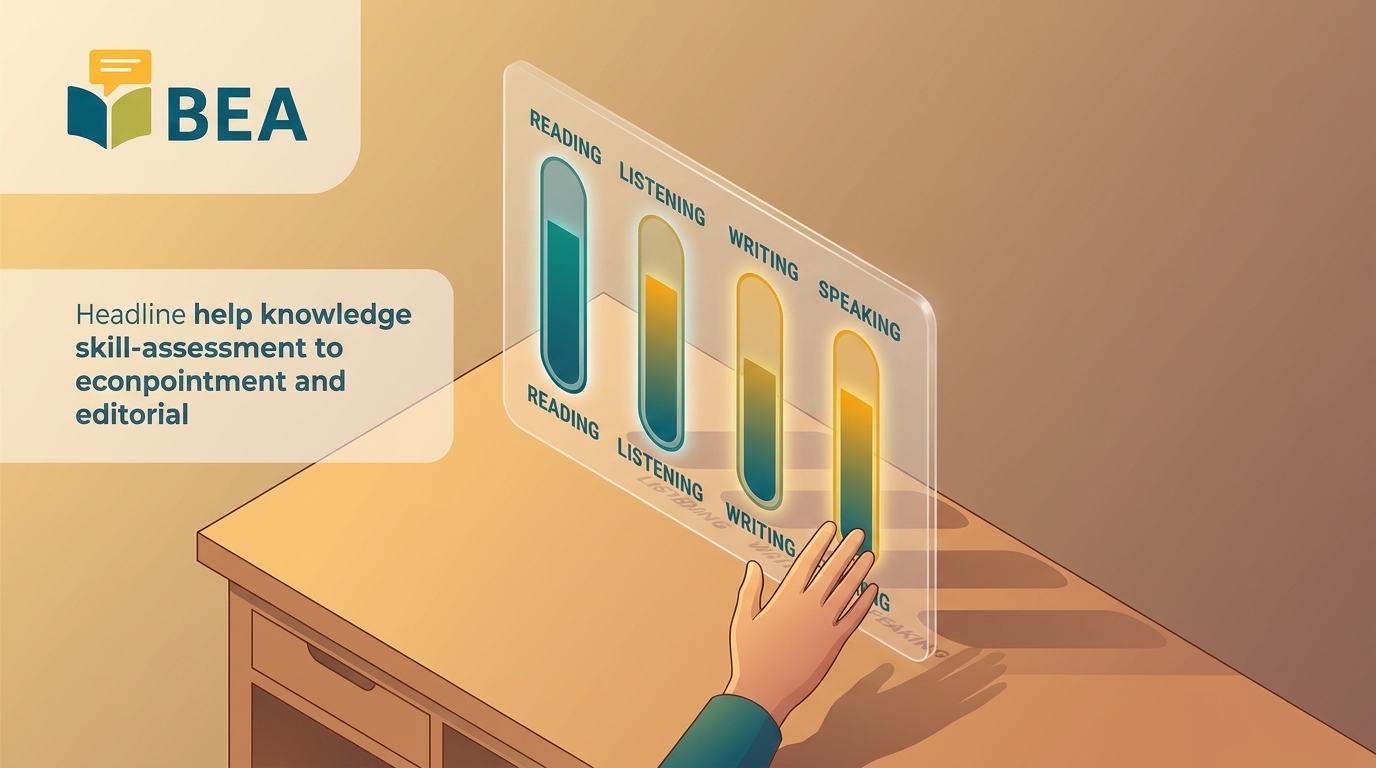
Your result page presents more than a single overall score. In fact, BEA reports your performance across distinct skill areas, each with its own band. You will typically see scores for reading, listening, writing, and language use. These are displayed against the Common European Framework of Reference (CEFR), which runs from A1 (beginner) to C2 (mastery).
Furthermore, the report shows you the specific band you achieved in each area, not just a pass or fail label. This granular view matters because an employer hiring for a customer-facing role may weigh your spoken communication score differently. Someone recruiting a data analyst who primarily reads technical documents will have different priorities.
Notably, your result page also includes a shareable verification link. This allows any employer or recruitment agency to confirm your score directly, without needing a third-party portal.
BEA Results Breakdown: What Each Skill Area Measures and Why It Matters to Employers
The BEA results breakdown covers four core competencies. Understanding each one helps you present your strengths with confidence.
Reading measures how accurately you process written English at speed. Employers value this because workplace communication increasingly arrives via email, policy documents, and digital systems. A B2 reading score tells a hiring manager you can handle complex professional texts independently.
Listening assesses your ability to extract meaning from spoken English in realistic contexts. In practice, this includes understanding varied accents, following instructions, and picking up implicit meaning. For roles involving remote meetings or international teams, this score carries significant weight.
Writing evaluates clarity, grammar, vocabulary range, and task fulfilment. Consequently, a strong writing score signals that you can draft professional correspondence without supervision. According to the British Council, over 75% of employers across sectors in 2026 rate written communication as a critical hiring criterion. This makes writing one of the most closely scrutinised skill areas.
Language use (sometimes called grammar and vocabulary in isolation) measures structural accuracy. However, do not underestimate this section. Errors in grammar undermine even strong ideas. Recruiters frequently cite linguistic precision as a differentiator at the shortlisting stage.
Moreover, reviewing this part of your BEA results breakdown carefully can reveal quick wins. These are areas where targeted practice delivers rapid improvement before your next application.
You can explore the full skill framework and assessment methodology on the BEA English Assessment website.
How to Interpret Your CEFR Band Against Real Workplace Expectations
The CEFR scale provides a shared language between you, your assessor, and your employer. That said, raw band labels can feel abstract without context. Here is how common bands map to realistic workplace situations in 2026.
B1 candidates handle straightforward professional tasks. They write clear emails on familiar topics and follow standard workplace conversations. Many entry-level administrative and operational roles require at least this level.
B2 is frequently the benchmark for professional roles requiring independent communication. At B2, you draft reports, negotiate in meetings, and read complex materials without significant difficulty. Many corporate and graduate-entry employers in the UK set B2 as their minimum English threshold.
C1 signals near-native fluency in professional contexts. By contrast, C1 candidates not only understand nuance — they can deploy it. Roles in legal, financial, or editorial environments often demand this level.
C2 represents mastery. It is relevant for roles where English precision is itself the product — translating, copywriting, or senior client advisory positions.
Given this mapping, reviewing your individual skill scores alongside your overall band places you in a stronger position. You will be better prepared when discussing your profile with an employer.
Common Questions Candidates Have After Receiving Their BEA Results
Can I retake if I am unhappy with one skill area? Yes. Because BEA reports skills separately, you can identify your weaker area and reassess strategically. There is no need to repeat the full assessment if one section held your overall band back.
How long are my results valid? BEA results reflect your proficiency at the point of assessment. Many employers accept results taken within the previous 24 months, though this varies by organisation. Check directly with the recruiter who commissioned your assessment.
What if my employer asks for a minimum band I did not reach? Share your current result and use the skill breakdown to show where your English is already strong. This provides a more nuanced conversation than a single headline score allows.
Can I share my results digitally? Yes. Your verified result is accessible and shareable directly from your candidate dashboard — no printed certificates required.
Make the Most of Your Full BEA Result Report
Your next step is straightforward. Log in to your candidate dashboard and review every section of your BEA results breakdown carefully. Note where your performance aligns with the role you are targeting. The BEA English Assessment platform also allows you to generate a shareable link for any employer or recruiter. Your verified score travels with you instantly and securely.
For further reading on CEFR and workplace language standards, the British Council’s CEFR guidance provides a reliable and authoritative reference point.
Conclusion
Understanding your BEA results breakdown transforms a score into a career tool. Each skill area tells employers something specific, each CEFR band carries real-world meaning, and each question you answer about your results builds clarity and confidence. Log in to beaenglish.co.uk today to access your full report and share your verified score with any employer — no third-party portal required.