
Understanding exactly what to expect before sitting an English proficiency test removes anxiety and improves performance. Many candidates arrive at an assessment unsure of the format, the timing, or even how to begin. This BEA assessment structure guide addresses every stage of the process, from initial registration through to receiving your results. Whether you are completing the test at the request of an employer or a recruitment agency, this breakdown will help you prepare with confidence.
What the BEA Assessment Structure Guide Covers Before You Begin: Registration, Identity Checks, and Getting Started at beaenglish.co.uk
The first step is straightforward. You visit BEA English Assessment at beaenglish.co.uk, create your account, and pay the one-time assessment fee of £99. This fee covers your full test and your results certificate — there are no hidden charges.
Once payment is confirmed, you receive access to your candidate dashboard. From there, you can choose when to sit the assessment. The BEA operates online, so you complete it in your own environment rather than a supervised exam hall.
Before the test begins, you complete a brief identity verification step. You confirm your name and contact details, ensuring your results certificate matches your professional records. This matters to employers and agencies because it guarantees the certificate belongs to the right individual.
In practice, the entire pre-test process takes under ten minutes. Furthermore, most candidates find the registration intuitive and the payment process smooth.
The Four Core Sections of the BEA Assessment and What Each One Measures
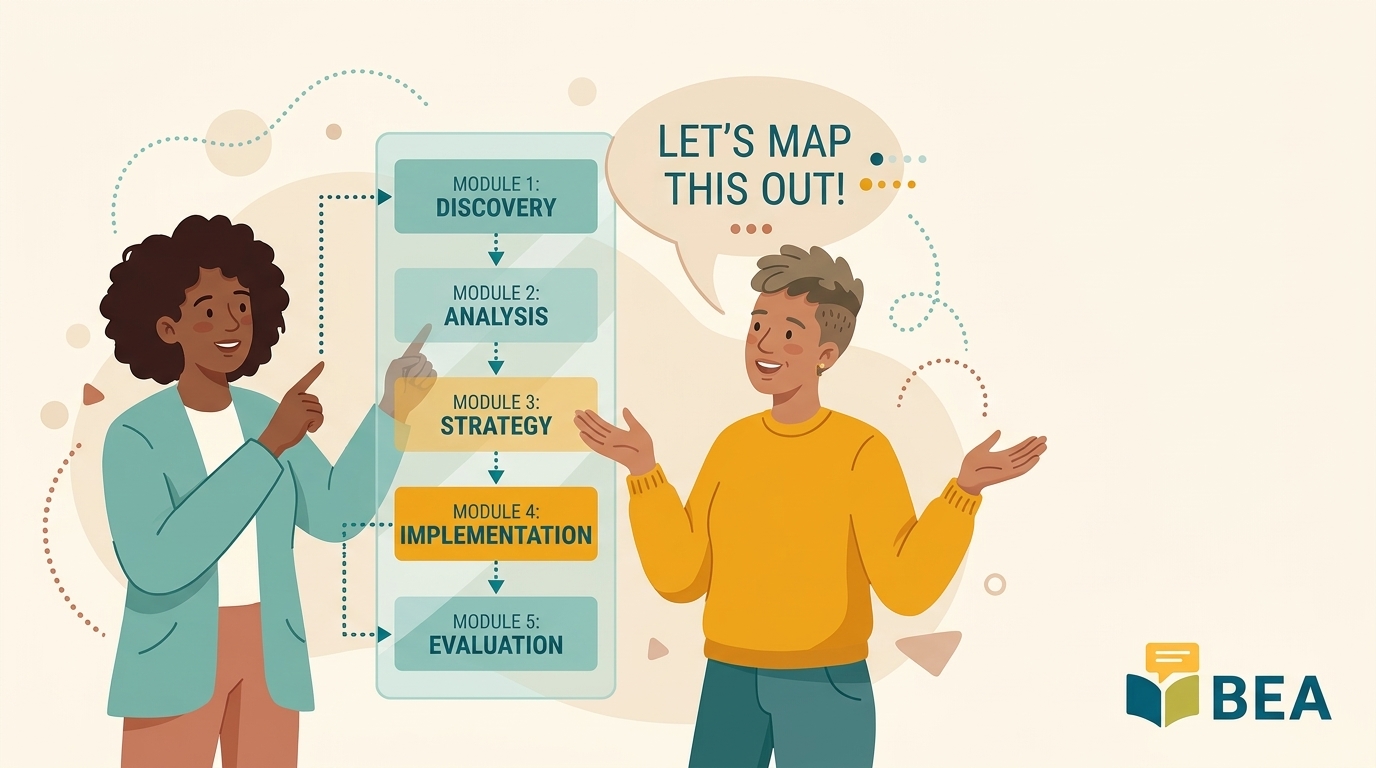
This BEA assessment structure guide would be incomplete without a clear breakdown of the four sections. Each section targets a distinct language skill relevant to professional workplaces.
1. Reading Comprehension presents candidates with professional texts — emails, reports, or workplace communications. You answer multiple-choice and short-answer questions that test how accurately you extract meaning from written material.
2. Listening plays audio recordings of workplace conversations or announcements. You answer questions that assess both literal understanding and inference — what was implied, not only what was said.
3. Writing asks you to produce a short piece of professional writing. Assessors evaluate grammar accuracy, vocabulary range, coherence, and appropriate register (the level of formality suited to a business context).
4. Grammar and Vocabulary tests your command of English structures through targeted exercises. Consequently, this section identifies specific gaps that might affect your workplace communication.
More importantly, research consistently shows that employers prioritise written and spoken English as core hiring criteria. According to a 2026 report from the UK Commission for Employment and Skills, communication skills remain among the top three competencies requested by British employers across all sectors. The BEA directly measures these competencies. As a result, candidates who understand this context appreciate why each section of the BEA assessment structure guide maps so precisely onto real workplace demands.
Timing, Format, and What the Test Environment Actually Feels Like
The full assessment takes approximately 60 to 75 minutes to complete. Each section carries its own time allocation, displayed clearly on screen as you progress. You do not need to complete all sections in a single sitting if your access window permits flexibility — check your dashboard for your specific terms.
The format is entirely digital. You read on screen, type your written responses, and use headphones or speakers for the listening section. Meanwhile, a stable internet connection and a quiet space are strongly recommended.
In practice, most candidates describe the experience as calm and manageable. There is no examiner watching you through a camera, and the interface is designed to be accessible rather than intimidating. Font sizes are clear, navigation buttons are prominent, and each section begins with brief on-screen instructions.
That said, candidates should treat the environment seriously. Sit at a desk, minimise distractions, and test your audio before you begin. By contrast, candidates who discover the format mid-test rather than preparing for it in advance consistently report lower confidence. Arriving prepared for the format makes a measurable difference to your performance.
After You Submit: How Quickly Results Arrive and What Comes Next
Once you submit your final section, the assessment closes and processing begins immediately. Results are typically available within two working days. You receive an email notification, and your certificate downloads directly from your candidate dashboard.
Consequently, employers and recruiters who commissioned the assessment can receive confirmation quickly. This speed matters in time-sensitive hiring processes. Your certificate states your overall proficiency level along with section-specific performance, giving recruiters precise, actionable data. Notably, this level of detail is one reason the BEA assessment structure guide is worth reading in full before you sit — understanding what is being measured helps you perform to your actual ability.
Beyond this, your certificate remains on record through your BEA account. Therefore, you can share it with future employers without needing to resit the test, provided it falls within the validity period specified by your commissioning organisation.
Ready to Begin? Your Next Steps
This BEA assessment structure guide has covered every stage of the process. Now you know what to expect, the next step is simply to register and complete the assessment.
Visit BEA English Assessment at beaenglish.co.uk to register, pay your £99 fee directly, and complete your assessment today. Clear your schedule for 60 to 75 minutes, find a quiet space, and begin with confidence — every section is manageable when you know what is coming.