
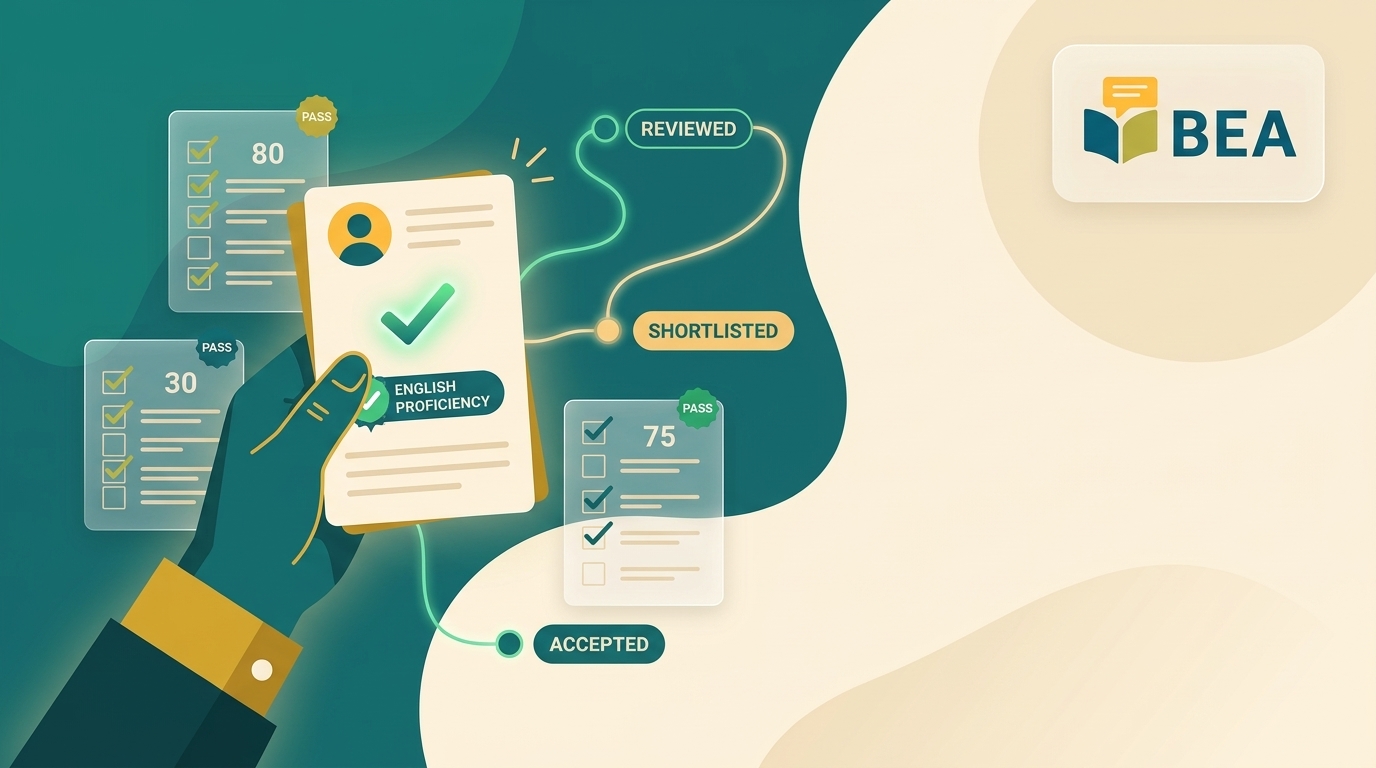
Every hiring team wants reliable data. Yet many HR professionals still wonder how recruiter English assessment decisions fit alongside interviews, CVs, and references. Understanding this process helps both employers who commission assessments and candidates who complete them. This article explains exactly how assessment scores enter the hiring funnel, how recruiters interpret them, and how they influence final decisions.
At What Stage Do HR Teams Introduce English Assessment Into the Hiring Funnel?
Timing matters enormously in structured recruitment. Most HR teams introduce English assessment at one of three stages: pre-application screening, post-CV shortlisting, or as a final verification step before offer.
In practice, the most common approach is post-CV shortlisting. A recruiter reviews applications, identifies a promising pool, then asks candidates to complete a standardised English assessment before proceeding. This method filters out unsuitable candidates efficiently without adding friction at the very first touchpoint.
However, some organisations — particularly those hiring at volume for customer-facing or communications-heavy roles — introduce assessment earlier. They embed it within the application form itself. This approach saves time and ensures every applicant meets a minimum language standard before a human reviews their CV.
For example, a logistics company recruiting 2026 cohorts of dispatch coordinators might require all applicants to submit a verified score before their CV reaches a hiring manager. This front-loads quality control and reduces unconscious bias in early screening. According to the CIPD’s 2025 Resourcing and Talent Planning Report, structured assessment tools significantly improve hiring consistency and reduce time-to-fill for specialist roles.
How Recruiter English Assessment Decisions Use Score Bands, Thresholds, and Role-Specific Criteria
Receiving a score is only the beginning. Recruiter English assessment decisions depend heavily on how organisations define and use score bands.
A score band is a range of results grouped to indicate a level of proficiency. For example, a score between 70 and 84 might indicate strong functional English, while 85 and above signals near-native or highly proficient communication. HR teams set minimum thresholds — the lowest acceptable score — before shortlisting begins.
Furthermore, benchmarking plays a critical role. Some organisations compare candidates against each other rather than against a fixed threshold. In a competitive intake, a score of 78 might pass the threshold but rank too low against a cohort averaging 85. Role-specific criteria refine this further. A warehouse operative role might require a lower threshold than a client-facing account manager position.
Notably, recruiters in 2026 increasingly use tiered criteria. A candidate might pass the minimum threshold for one role but automatically qualify for a higher-grade position based on their score alone. This approach maximises the value of assessment data across multiple vacancies simultaneously.
With this in mind, BEA English Assessment provides clear, standardised score reports that allow HR teams to apply their own thresholds with confidence. The results are independently verified, which reduces disputes and builds candidate trust.
Turning Assessment Results Into Offer Decisions: Comparing Scores Against Interviews and References
Assessment scores rarely make decisions in isolation. Instead, HR teams weigh English proficiency results alongside interview performance, references, and skills tests. Recruiter English assessment decisions at this stage become integrative rather than binary.
In practice, a strong interview performance can sometimes offset a borderline assessment score, particularly if the role demands interpersonal skills over written precision. Conversely, an exceptional score can reinforce confidence in a candidate who interviews nervously but communicates clearly in writing and structured tasks.
However, for roles where English is a safety-critical requirement — healthcare, legal compliance, or regulated financial services — the assessment score often carries greater weight. Employers in these sectors treat a failed threshold as a hard disqualifier, regardless of other strengths.
Therefore, HR teams benefit from documenting their scoring criteria before recruitment begins. This creates a consistent, defensible process. It also demonstrates compliance with equality legislation, since decisions rest on objective, standardised evidence rather than subjective impressions. Crucially, recruiter English assessment decisions that are documented in advance are far easier to defend if a hiring outcome is later challenged.
How to Integrate English Assessment Into Your Hiring Workflow
Getting started is straightforward. First, identify the roles within your organisation where English proficiency is operationally critical. Next, define your minimum threshold for each role tier. Then, decide at which funnel stage — pre-application, post-CV, or pre-offer — assessment fits best.
In addition, consider how you will communicate the assessment requirement to candidates. Transparent communication reduces drop-off and builds employer brand reputation. Candidates who understand why assessment is used respond more positively to the process.
BEA English Assessment supports HR teams with verified, shareable score reports that candidates submit directly to recruiters. This removes the administrative burden from your team and ensures results are tamper-proof and standardised.
Conclusion
Recruiter English assessment decisions work best when organisations embed them deliberately into a structured hiring process. Scores become powerful tools when HR teams define clear thresholds, benchmark appropriately, and weigh results alongside other data. Explore how BEA English Assessment fits into your hiring workflow — visit beaenglish.co.uk to learn how candidates submit verified results you can trust.