
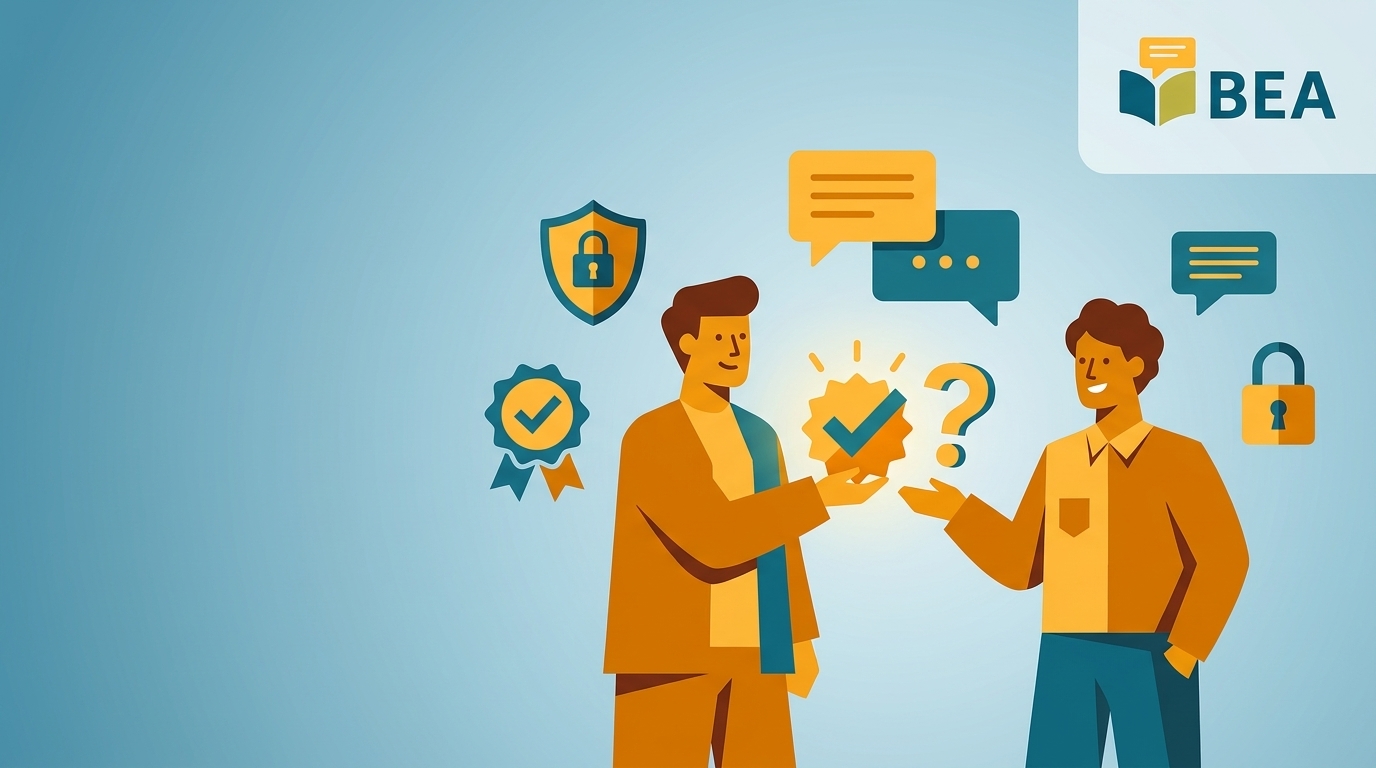
When an employer or recruitment agency asks you to sit an online English test, a healthy dose of scepticism is entirely reasonable. Is the BEA English test legit? You want to know before you hand over personal details or invest time in preparation. That question appears frequently in search results, and it deserves a clear, direct answer rather than vague reassurance.
In 2026, online assessment fraud remains a genuine concern. The UK’s National Cyber Security Centre reported a continued rise in credential-harvesting scams that mimic legitimate HR platforms. However, BEA English Assessment is not one of them. This article explains exactly what BEA is, why suspicion sometimes arises, and how you can verify any BEA result independently in minutes.
Is the BEA English Test Legit? The Direct Answer
Yes — BEA English Assessment is a legitimate, professionally developed English proficiency test. It maps directly to the Common European Framework of Reference for Languages (CEFR), the internationally recognised six-level scale (A1 to C2) used by universities, employers, and immigration authorities across Europe and beyond.
BEA assesses reading, listening, writing, and grammar across adaptive question sets. Results produce a CEFR band that employers can interpret immediately. The assessment sits entirely on beaenglish.co.uk, the brand’s official domain — there are no third-party reseller portals or redirects involved.
Furthermore, the platform uses encrypted data transmission (HTTPS) and stores candidate results securely. No legitimate recruiter will ask you to pay for BEA through an unofficial payment link or a WhatsApp message. If that happens, treat it as a red flag and contact the employer directly to confirm instructions.
In practice, thousands of candidates complete the BEA assessment each year at the request of UK-based employers and global recruitment agencies. A CEFR-aligned result gives both sides of the hiring process a shared, objective language. More importantly, the BEA English test is legit precisely because it is built on this internationally recognised framework rather than a proprietary scoring system invented solely for commercial purposes.
Is BEA English Assessment a Scam? Why the Question Keeps Appearing Online
The word “scam” attaches itself to many legitimate online assessments — not because those assessments are fraudulent, but because the hiring context creates anxiety. Candidates receive an unexpected email, click an unfamiliar link, and reasonably wonder whether the request is genuine.
However, BEA specifically attracts this question for one straightforward reason: it is relatively newer in the public consciousness than decades-old institutional tests. Consequently, fewer candidates have heard of it before their employer mentions it. Low name recognition does not equal low credibility.
According to the British Council’s English Language Market Report 2025, demand for workplace English verification tools grew by over 30% between 2023 and 2025 as remote and international hiring increased. BEA sits within that growing category of employer-commissioned proficiency checks — a category that is both legitimate and expanding. Encountering the BEA English test legit question for the first time is entirely normal for candidates entering the current UK job market.
In addition, the question sometimes arises because candidates confuse BEA with phishing emails that falsely invoke well-known test brands. That confusion is understandable. Genuine BEA invitations always direct candidates to the official BEA English Assessment website and originate from verified employer or agency communications. No genuine BEA communication will ever ask you to download software or make payment outside the official domain.
3-Step Verification Checklist: Confirm Any BEA Result in Minutes
If you or your organisation need to confirm that a BEA result is authentic, follow these three steps.
Step 1 — Check the Domain
Every genuine BEA test and result originates from beaenglish.co.uk. Look at the URL in your browser bar. If the domain differs by even one character, do not proceed.
Step 2 — Contact the Issuing Employer or Agency
Ask the recruiter or HR team to confirm the assessment request in writing. Legitimate organisations will do this without hesitation. They will also be able to tell you exactly which CEFR levels they require for the role.
Step 3 — Cross-Reference the Result Certificate
BEA result certificates carry a unique candidate reference number. Employers can contact BEA directly through beaenglish.co.uk to verify authenticity. No result can be fabricated without that reference matching BEA’s internal records. The verification process takes minutes rather than days.
Frequently Asked Questions About BEA Legitimacy and Safety
Is the BEA English test legit for visa or immigration purposes? BEA is designed primarily for employment screening rather than visa applications. For immigration routes that require a Home Office-approved test, candidates should check the UK Visas and Immigration approved provider list at gov.uk/government/publications/guidance-on-applying-for-uk-visa-approved-english-language-tests.
Does BEA English Assessment store my personal data safely? Yes. BEA processes personal data in accordance with UK GDPR. Candidate information is used solely to generate and store your result.
Can I sit the BEA test without an employer requesting it? Yes. Individuals can purchase and sit the assessment independently through beaenglish.co.uk. This is useful if you want a recognised CEFR certificate before beginning a job search.
Is the BEA English test legit as evidence for employers? Absolutely. The CEFR alignment means any employer familiar with European language standards can interpret the result immediately. It carries the same objective weight as any standardised proficiency measure.
What should I do if someone asks me to pay for BEA outside the official website? Do not pay. Report the request to the employer or agency that originally asked you to sit the test, and flag it to Action Fraud at actionfraud.police.uk.
Ready to Confirm BEA Is Legitimate? Here Are Your Next Steps
Given this information, the clearest action you can take is to visit the source directly. Do not rely on third-party descriptions or unverified forum posts. Instead, explore the test format, pricing, and CEFR mapping yourself.
Visit beaenglish.co.uk to review what the assessment covers, understand how results are reported, and purchase a sitting if you or your organisation need a verified English proficiency certificate today.
Conclusion
To summarise: the BEA English test is legit, CEFR-aligned, and used by employers and recruiters who need objective English proficiency evidence. It operates from a single, secure official domain and produces verifiable result certificates. Every aspect of the process — from invitation to result — can be independently confirmed in minutes. If you have been asked to sit the assessment and still have doubts, revisit the three-step verification checklist above. The evidence is clear: the BEA English test legit standing rests on transparent CEFR alignment, secure data handling, and direct employer accountability. Ready to take a legitimate, CEFR-aligned English proficiency test? Visit beaenglish.co.uk to purchase and sit the BEA Assessment directly — no third parties, no redirects.