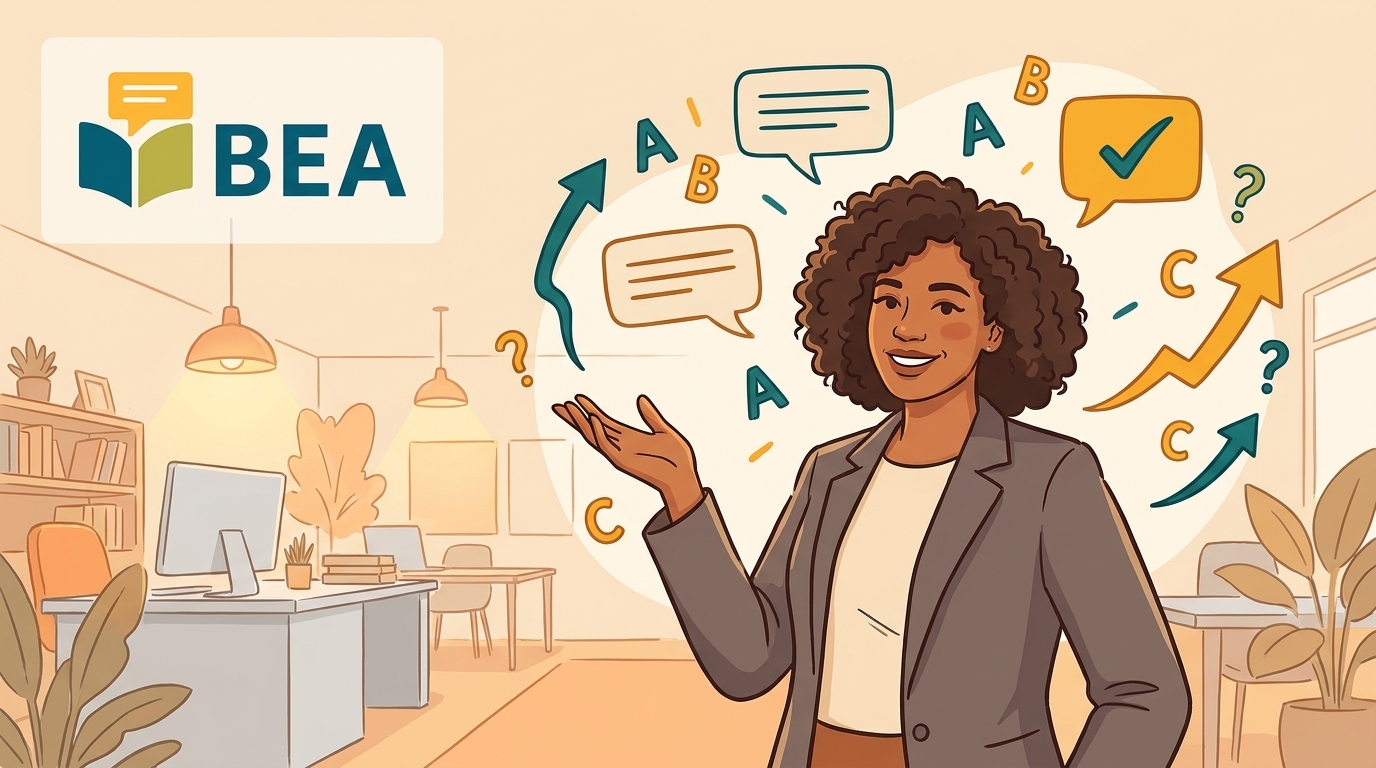
Meet Priya: A Capable Professional Held Back by Communication Gaps
Priya had everything an employer could want on paper. A strong technical background, years of relevant experience, and a reputation among colleagues for meticulous, reliable work. Yet promotion after promotion seemed to pass her by. Feedback from managers was frustratingly vague — she was doing well, but something was holding her back. It took an honest conversation with a mentor to name the issue clearly: her workplace English communication wasn’t matching the quality of her thinking.
This is a story many professionals recognise, even if they rarely say it out loud. Language gaps in professional environments rarely announce themselves dramatically. Instead, they accumulate quietly — in the email that took too long to write, in the meeting where a great idea went unexpressed, in the client call where confidence faltered mid-sentence. For Priya, the technical ability was never in question. The challenge was translating that ability into the kind of clear, authoritative professional communication that organisations reward.
What makes Priya’s experience particularly relevant is how common it is across industries and roles. Professionals from non-English-speaking backgrounds, and even those who have used English for years in academic or casual settings, often discover that workplace English operates by a distinct set of conventions — register, tone, precision, and structure — that nobody formally teaches you.
The Turning Point — Recognising Where Workplace English Was Letting Her Down (Emails, Meetings, and Client Calls)
Priya’s turning point came when she decided to examine her communication honestly and specifically, rather than accepting the general discomfort she’d grown used to. She began keeping notes on the situations that consistently caused her anxiety: drafting formal emails to senior stakeholders, contributing during fast-moving team meetings, and holding her ground during client calls when a question caught her off guard.
Each of these contexts demands a slightly different skill set. Written communication requires clarity, appropriate formality, and an understanding of professional structure — how to open, how to make a request, how to close without ambiguity. Meetings require something else entirely: real-time listening comprehension, the ability to interject appropriately, and the confidence to express a position without over-hedging. Client calls combine both pressures, adding the stakes of external representation. Priya wasn’t struggling with all of these equally, but she hadn’t previously broken them apart to understand where the real gaps were.
This diagnostic step — honestly mapping where and why communication feels difficult — is often the most important first move when improving workplace English communication skills professionally. Without it, effort gets spread thinly across everything, or focused on the wrong areas entirely. For Priya, the clearest gap was in spoken fluency under pressure, particularly when she hadn’t had time to prepare. Her written English was functional but overly cautious, hedged in ways that inadvertently undermined her authority on the page.
Skill-Building in Practice: The Daily Habits That Transformed Her Written and Spoken English at Work
Once she had a clear picture of her specific gaps, Priya built a structured, daily practice rather than relying on occasional effort. For written English, she started studying the emails and documents produced by effective communicators in her organisation — noting their sentence length, vocabulary choices, and how they framed requests or delivered difficult messages. She rewrote her own drafts with these models in mind before sending them, gradually internalising the patterns.
For spoken English, she used low-stakes opportunities deliberately. Team stand-ups became a daily practice ground for expressing herself concisely under mild time pressure. She started recording herself during practice runs of presentations and listening back critically — an uncomfortable exercise, but a revealing one. She also worked through professional English listening material daily, specifically content that mirrored the language register of her industry, training her ear to process formal spoken English more quickly.
One of the most effective shifts was in how Priya handled preparation. Rather than hoping general fluency would carry her through meetings, she began preparing specific phrases for the scenarios that routinely challenged her — how to ask for clarification professionally, how to disagree constructively, how to buy thinking time without sounding uncertain. These weren’t scripts; they were structured options that reduced the cognitive load of real-time communication, freeing her to focus on content rather than language mechanics.
Improving workplace English communication skills professionally is rarely about learning more vocabulary in isolation. It is about building reliable habits that connect language knowledge to real performance, consistently, in the specific contexts that matter at work.
From Hesitant Participant to Confident Presenter: How Structured Progress Changed Her Career Trajectory
Eighteen months after she began working systematically on her workplace English, Priya was leading client presentations. The shift wasn’t dramatic or sudden — it was the cumulative result of deliberate, targeted practice that gradually expanded what felt possible. Colleagues began citing her communication as one of her standout professional qualities, the same area that had previously been an invisible ceiling.
Structured progress matters because it creates evidence — evidence for the individual that growth is real and measurable, and evidence for employers that a professional is developing. When Priya was eventually assessed formally on her professional English proficiency, she had a clear, documented picture of her abilities across writing, speaking, listening, and reading in workplace contexts. This wasn’t just useful for her own confidence; it gave her something concrete to reference in performance conversations and career development discussions.
Her story is a reminder that professional English development is not about starting over or erasing an existing professional identity. It is about ensuring that the quality of your communication reflects the quality of your thinking — that nothing is lost between what you know and what you are able to express in a professional setting.
Ready to understand exactly where your workplace English stands? Take the BEA English Assessment and get a clear picture of your professional communication strengths — and where to grow next.
Leave a Reply